- Mon. - Fri.: 8:30 a.m. - 5:00 p.m.
Structured Information, Efficient Processes
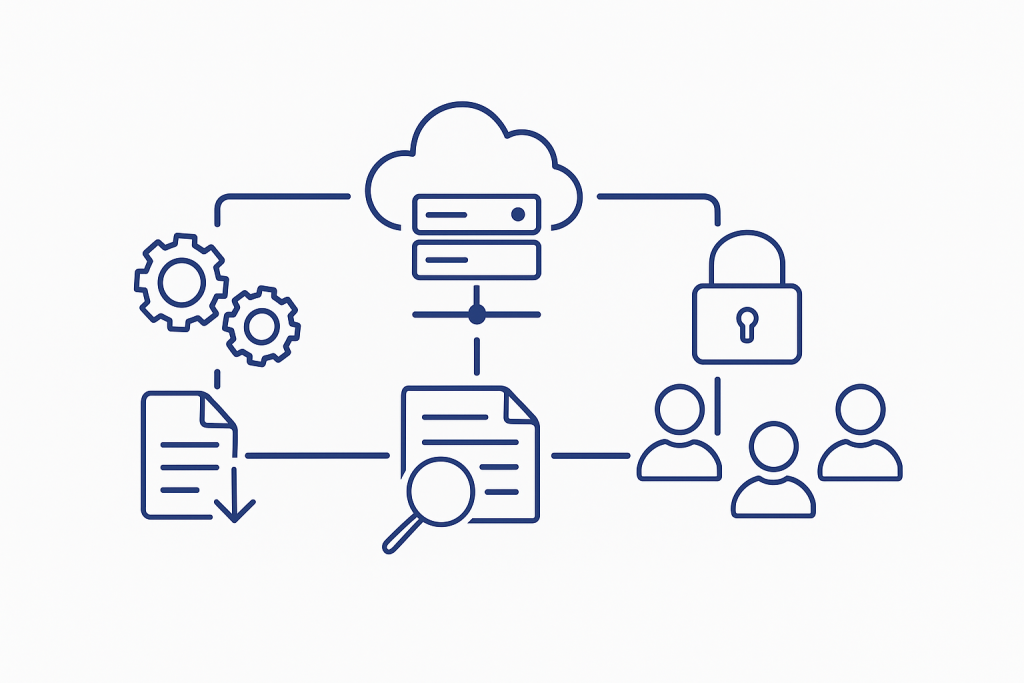
An Enterprise Content Management System (ECM system) is a comprehensive
software solution for capturing, managing, storing, archiving, and
delivering content and information within an organization. Unlike a traditional document management system (DMS), an ECM system encompasses all types of information—whether documents, emails, scans, videos, or other digital content—and seamlessly integrates them into your business processes.
An ECM is designed to efficiently manage structured and unstructured content (e.g., documents, emails, contracts, invoices, videos, scans) throughout its entire lifecycle—from creation and editing to archiving and disposal. The goal is to optimize the flow of information within the company, automate business processes, and ensure compliance with legal and internal company requirements.

Less searching, more work: Documents can be found instantly, and processes run automatically.
Legally compliant archiving of all documents, clear access rights, and data protection—all traceable at any time.
Teams can access up-to-date information from anywhere and collaborate efficiently.

The AIIM (Association for Intelligent Information Management) defines ECM based on five main components:
Capture:
Capturing content from various sources, such as scans, emails, mobile devices, or external systems.
Manage:
Classification, structuring, and editing of content. This also includes workflows, version control, and permission management.
Store (Save):
Secure, structured, and fast storage of information in digital repositories.
Preserve:
Long-term, audit-compliant archiving in accordance with legal requirements (e.g., GDPR, GoBD).
Deliver:
Making content available through various channels—such as desktop, web, mobile devices, or other applications (ERP, CRM, etc.).